

The Human Body
The Smithsonian
 GENRE: Health & Wellness
 PAGES: 202
 COMPLETED: July 9, 2025
 RATING:
Short Summary
The Smithsonian takes readers on a fascinating tour of the miraculous human body, exploring how it works from the inside out.
Key Takeaways
1️⃣ The Body Basics
One of the most interesting things about the human body is that its actual “ingredients” are very simple. We are made up of a few very basic elements found everywhere in nature. It is the way they are put together that makes us uniquely human. We are made of the following basic elements — notice that three of the elements account for 93% of the human body’s weight.
- Oxygen — 65%
- Carbon — 18.5%
- Hydrogen — 10%
- Other Stuff — 6.5%
Most of the Oxygen and Hydrogen in our body combine to form water (H2O) — we are about 50-60% water, most of which is stored in our cells. Interestingly, Carbon is the same material that lead pencils are made of.
The human body is made up of about 37-40 trillion cells, and there are more than 200 different types of cells that carry out various functions in the body (e.g. red blood cells, nerve cells, muscle cells, etc.). Many of these different types of cells work together in teams to build the full human body. The hierarchy includes:
- Tissues — Cells performing the same function are grouped together to form body tissue, such as skin, muscle, fat, or heart muscle. Blood is also a tissue in liquid form. In this example, let’s say cells combine to form stomach tissue.
- Organs — Different tissues combine to form larger structures called organs, like the liver, pancreas, and stomach. In this case, stomach tissue creates the stomach organ.
- Body Systems — Organs are at the center of 12 internal body systems. Each system has a specific job to do to keep the body functioning well. In this example, the stomach organ plays a vital role in the digestive system.
The majority of our cells (about 70%) are red blood cells, which are responsible for delivering oxygen throughout the body. Interestingly, despite being so abundant, the red blood cell is the only type of cell that does not have a nucleus. The nucleus is the cell’s control center, and it’s where our DNA is stored. A few other interesting components of a cell:
- Cell Membrane — This flexible membrane surrounds the cell and controls what enters and exits. Proteins sit on the cell membrane and interact with things outside the cell, like other proteins, molecules, antigens, and antibodies.
- Ribosome — The ribosome is where proteins are built
- Mitochondria — These sausage-shaped things are the cell’s power stations. They release energy in the form of ATP using glucose and other foods. ATP is the primary energy currency of cells and is our body’s quickest and easiest source of energy. The production and release of ATP in mitochondria allows a cell to do its many activities. Interestingly, creatine works by increasing the amount of ATP our cells can produce, which allows us to move faster, lift heavier, and more.
Cells are jam-packed with proteins, which are vital to the communication between cells. Proteins are created when amino acids are linked together in specific sequences. The instructions for assembling these proteins are stored in the DNA found in each cell’s nucleus. Your DNA is a super long strand that consists of smaller sections, your genes, and each gene is the instruction for one protein. The process of building a protein happens in two main steps:
- The DNA is transcribed into a messenger molecule called mRNA
- The mRNA then exits the nucleus and travels to a part of the cell called the ribosome, where it’s translated into a chain of amino acids that folds into a functional protein.
One very interesting type of cell is the Stem Cell. These are like “master cells” that can renew themselves or grow into one of the more than 200 different types of cells in the body. Stem cells are crucial because they help replenish cells that have died or have been damaged. This helps heal damaged tissue and organs. Most cells have a natural lifespan, and when their time is up, they self-destruct. Stem cells help replenish the millions of cell deaths that occur every day. Red blood cells, for example, have a very short lifespan — two million new red blood cells are created every second to replace the same number that die.
Back to DNA. We share about 99% of our DNA with chimps. Genes are sub-sections within our DNA strands that contain instructions for creating proteins. We have 20,000 different genes, which is more than a chicken but less than a mouse. Our genes are what determine things like our height, eye color, hair style, and so much more. Think of genes as a set of unique instructions for building us, similar to a set of directions for building a Lego set. All of us have nearly identical genes — it is the variation of a few genes that makes us unique. All of our cells — with the exception of red blood cells — contain a copy of our entire genome in the nucleus, where our DNA lives.
Two special Chromosomes within our genes — called X and Y — determine if we turn out to be male or female. Every one of a woman’s eggs has an X chromosome, but a male sperm can carry either an X or a Y chromosome. Therefore, it is the male’s sperm that determines the baby’s sex — if the sperm that reaches the egg contains a Y chromosome, the baby will be a boy (XY). If the sperm that reaches the egg carries an X chromosome, the baby will be a girl (XX).
2️⃣ Body Systems 1-4
We could not survive without the 12 systems of the human body. These are groups of body parts that carry out different tasks and constantly communicate with each other to keep the body running smoothly.
Let’s start with the Integumentary System, which involves the skin, hair, and nails. This system’s purpose is to cover and protect our body from things like harmful bacteria and viruses. The skin is the largest organ of the body. Skin stem cells are constantly pumping out new skin cells, which slowly move up closer to the surface. By the time they reach the surface, they’re dead. All of the skin you see in the mirror is dead skin, made up of up to 50 layers of dead skin cells. As this dead layer of skin is damaged and used during your daily life, it is constantly being shed and replaced by new skin cells that are moving up from below. It takes skin between 30-50 days to completely turn over, and you shed about 40,000 dead skin cells every second! That’s important because when your dead skin flakes away, harmful bacteria crawling on it go with it.
When it’s too hot or cold, skin and hair play a big role in keeping us at a safe and comfortable temperature. A thermostat in the Brain monitors messages from the body’s sensors and sends signals for the body to cool or warm itself. If it’s too hot, the Brain tells the skin to sweat. It does this by widening blood vessels and relaxing your hair so heat can be released into the air. If it’s too cold, skin goes into heat-retention mode by narrowing blood vessels to keep heat trapped inside the body. Tiny muscles on your skin contract, which causes skin hairs to stand straight up. These muscles pull on the skin above, creating lumps that we call goosebumps. One of the skin’s major functions is to make Vitamin D by harnessing the sun’s rays. However, the sun’s ultraviolet rays can damage the skin, so the body produces a substance called Melanin to protect it. Melanin is what makes skin look darker. When you have a tan, lots of melanin has been produced.
Second, we have the Skeletal System. This system is made of up of 206 bones that protect your internal organs and allow you to move. But bones do more than that — they also produce red and white blood cells in the bone marrow. The collagen in bone constantly renews itself, so you have a completely new skeleton every seven years or so. The star player of this system is the Spine (Backbone). Throughout our body, our bones are connected and protected by Cartilage, Tendons, and Ligaments.
- Cartilage — This is soft tissue that covers the ends of bones and helps joints move easily while preventing them from painfully grinding together. It’s like padding for our bones!
- Tendons — These are what connect muscles to bones. In this way, they help move the skeleton.
- Ligaments — These connect bones to other bones and keep joints stable
Third, we have the Muscular System. We have more than 600 muscles — some big (e.g. your butt) and some tiny (e.g. it takes 17 muscles to smile). Every single movement your body makes — whether you’re flexing your biceps or blinking your eyes — uses muscles. Muscle cells, which are quite long and are called muscle fibers, make up our muscle tissue. Muscle fibers use energy to contract and shorten, and this movement is what pulls the different parts of the body into position. Muscles are either fast-twitch or slow-twitch — we typically have an even split. All muscle movements are controlled by nerve signals sent by the Brain via the Nervous System (our Spinal Cord and huge network of nerves). When your muscles receive a message from the Brain to move, they contract and pull on bone to make the body act. Some muscle movements are conscious (e.g. flexing in the mirror) and others are unconscious (e.g. your heart beating over and over).
Fourth, we have the Nervous System. This is the body’s communication and control network. We are basically hooked up with billions of interconnecting nerve cells wired up to every part of the body. Think of it as having wires all over your body. The Brain can send and receive messages to and from these billions of nerve cells, and its main “communications highway” is the Spinal Cord, a long, tube-like structure made of nerves that runs down your back, carrying messages between the Brain and the rest of the body. This vast network lets us sense things like temperature, pressure, pain, and balance by sending information to the Brain for processing. The Brain and Spinal Cord make up the Central Nervous System (CNS), which coordinates most of the body’s activities, from blinking and breathing to seeing and standing up. The Brain sends its messages to the nerves hooked up all over our body, and those messages are what cause our muscles to move and perform the action we want to make.
The cells of the Brain and Nervous System are called Neurons. Each neuron has thousands of fibers that extend from the cell’s body. One of these fibers is called an Axon, and it carries outgoing electrical signals. Another one of these fibers is called a Dendrite, which receives incoming electrical signals from the Axon. Neurons connect with each other at junctions called Synapses. Once two neurons have connected at the Synapse, the Axon is able to transmit its signal/message to the Dendrite, with some help from chemicals called Neurotransmitters. This process happens repeatedly and is how the Brain’s message travels all the way to the desired part of the body. Everything happens really fast — messages can travel all the way from the Brain to the feet faster than the blink of an eye.
3️⃣ Body Systems 5-8
The fifth body system is the Endocrine System. This is the system that — using various glands and a few organs around the body — produces and regulates Hormones, which are chemical messages released straight into the bloodstream that travel between the body’s organs and change the way certain cells work. There are about 50 hormones, and they control things like growth, stress, hunger, sleep, reproduction, and more. Hormones play a major role in the growth and physical changes teenagers experience during puberty. Below are a few key areas of the Endocrine System (listed in descending order as they appear in the body):
- Hypothalamus — Located in the Brain, the Hypothalamus links the Nervous System and the Endocrine System. The Hypothalamus is what tells our Pituitary Gland (next) to release certain hormones.
- Pituitary Gland — This pea-sized gland is also located in the Brain and is considered “the master” of the Endocrine System. Reacting to orders from the Hypothalamus, it produces or regulates hormones like growth hormone, cortisol, estrogen, testosterone, oxytocin, adrenaline, and more. Endorphins are also a type of hormone, and they are the body’s natural painkillers. Endorphins are released by the Hypothalamus and Pituitary Gland in response to pain or stress, and this group of hormones both relieves pain and creates a general feeling of well-being. When you exercise vigorously, the Pituitary Gland squirts endorphins into your bloodstream. Endorphins are the same chemicals released when you eat or have sex. They are closely related to opiates — that’s why it is called ‘the runner’s high’. There is barely a corner of your life that the Pituitary Gland doesn’t affect.
- Pineal Gland — Also located in the Brain, this gland makes the hormone Melatonin, which helps us trigger sleep
- Thyroid — Located in the throat area, this gland releases the hormone Thyroxine, which affects the body’s metabolic rate, or the speed at which cells use up the oxygen that fuels them
- Thymus — Located in the chest area, this gland secretes hormones to boost the production of white blood cells. It slowly shrinks as we get older, which is part of the reason older people have a weaker immune system and struggle to fight off harmful bacteria and viruses.
- Heart — The Heart secretes various hormones that help us control our blood pressure
- Stomach — The Stomach releases the hormone Gastrin into the bloodstream when we eat food. When Gastrin is released, cells in the stomach create acid that aids in breaking down and digesting food.
- Adrenal Gland — This gland produces hormones that control sodium levels in our body, as well as adrenaline. Adrenaline (also known as Epinephrine) and Cortisol are two stress hormones produced and released by this gland that activate our fight-or-flight response when we encounter a threat. Unfortunately, these hormones can be released when we incorrectly perceive a threat as well, leading to feelings of anxiety.
- Pancreas — The Pancreas is also an organ, and one of its main jobs involves making and releasing the hormone Insulin into the bloodstream. Insulin brings our blood sugar down after eating food, especially sugar or carbs. It does this by taking the sugar in our bloodstream and packing it into our cells, usually our muscle cells.
- Small Intestine — The small intestine releases several kinds of hormones that help us digest food
- Testes / Ovaries — The testes are where the sex hormone Testosterone is produced. In men, testosterone makes a man fertile, gives him attributes like a deep voice and facial hair, and influences behavior via sex drive and a taste for risk and aggression. Testosterone levels tend to fall by 1% a year beginning in the 40s. In women, the ovaries produce the sex hormone Estrogen and Progesterone, which control her reproductive cycle.
Sixth is the Cardiovascular System. The Heart is the foundation of the system. It beats somewhere around 100,000 times every day, pushing oxygen-rich blood out to the cells of the body via our vast network of Arteries (think: arteries send blood “away”). Once red blood cells have made their way around the body and delivered oxygen, they head back to the Heart via our network of Veins. Blood that is not oxygenated is blueish in color, which is why veins are that same color — they are transporting blueish de-oxygenated blood.
The Heart is not really one pump but two: One pump sends blood to the Lungs (the Pulmonary Circuit) and the other pump sends it around the body (the Systemic Circuit). Indeed, before blood can be sent out to the cells of the body, it needs to be oxygenated. For this, blood heads from the Heart to the Lungs to be oxygenated. It is then routed back to the heart and immediately gets pumped out to the rest of the body. The red blood cells in blood contain hemoglobin, a protein that carries oxygen, so these cells are basically a shipping container for the oxygen. A typical red blood cell will be shot around the body about 150,000 times before it is too battered to go on. At that point, the battered cell will be collected and sent to the Spleen to be discarded.
Coming in at No. 7, we have the Lymphatic System. Just like we have a network of nerves and blood vessels that run throughout our body, we also have network of lymph vessels that collects and drains away excess fluid from our muscles and other areas of our body. All body tissue is bathed in a watery liquid that comes from the surrounding blood vessels. Most of it drains back into the veins, but the rest of it (the excess) becomes a clear fluid called Lymph. This excess fluid is transported through the Lymphatic System back to the chest area, where it is carried back into the bloodstream. On this journey, the lymph passes through some of the 600+ Lymph Nodes located around the body — these little stations filter and clean the Lymph. This process of clearing Lymph is vital — without it, the excess fluid buildup would cause us to swell like a balloon.
As an added bonus, the Lymphatic System is also the network that many of our Immune System cells (e.g. Dendritic Cells, T-Cells, etc.) use to travel around the body. For cells, the human body is an enormous continent. The Lymphatic System provides a way for immune cells to traverse this huge continent. During an infection, many important Immune System processes happen in the Lymph Nodes. See the notes for Immune by Philipp Dettmer to learn more.
The eighth system is the Immune System. This is the system that protects us from harmful bacteria, viruses, parasites, and all kinds of other pathogens. See the notes for Immune by Philipp Dettmer for a full breakdown of this system.
4️⃣ Body Systems 9-12
The ninth body system is the Respiratory System. This is the system that works hand-in-hand with the Cardiovascular System to deliver Oxygen to all of the cells in our body and remove Carbon Dioxide waste. Our cells need a steady flow of oxygen to create energy and stay alive. The system’s star players are the Lungs, which are filled with millions of tiny airways that branch out like a tree. The air we breathe consists of about 78% Nitrogen and 21% Oxygen. When we breath in, Oxygen is sent down the Trachea (or windpipe) and into the expanding Lungs, where it is used to oxygenate red blood cells (blood) that have been sent over from the Heart. The oxygenated blood then heads back to the Heart, where it is shot around the body to deliver Oxygen to our cells, tissues, and organs.
The cells in our body use the Oxygen to create energy in a process called Cellular Respiration. This process causes cells to release another gas called Carbon Dioxide, which is basically cell waste. The CO2 released by our cells is carried back to the Lungs by the blood, where it is expelled from our body with a nice, big exhale. This gas exchange — cells taking in Oxygen and expelling CO2 — is critical to our ability to create energy and function properly.
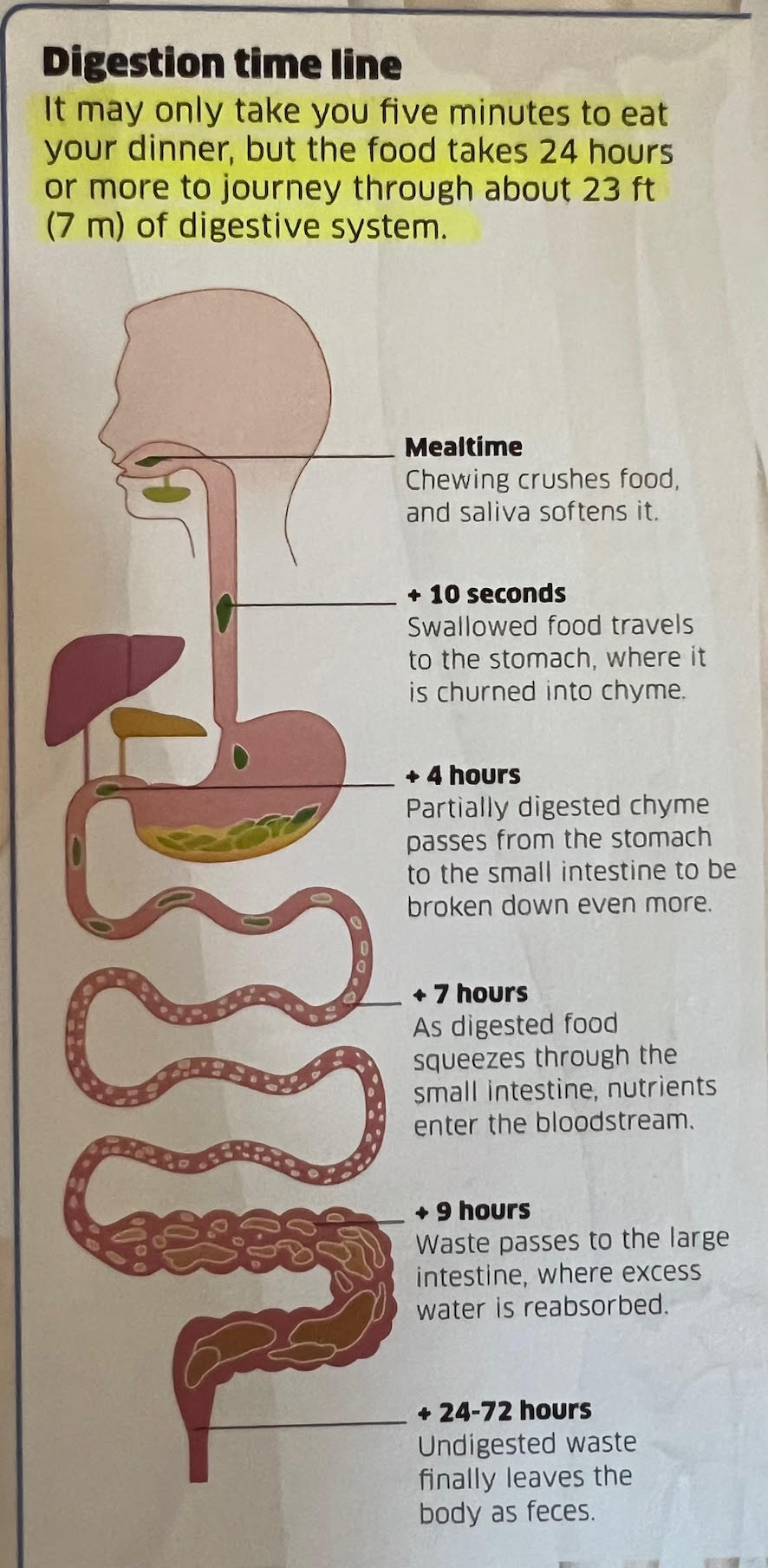
The tenth system is the Digestive System. Food gives us the nutrients and energy we need, and the job of this system is to break it down into simple substances that our body can use. These are then absorbed by the blood and transferred to our cells, tissues, and organs. Indigestible waste is removed through our poop. The star player of this system is the Digestive Tract, which is a long, 23-foot tube that starts in the mouth, travels down to the Stomach, then runs through the Small Intestines and Large Intestines to the Anus. Other organs like the Liver, Gall Bladder, and Pancreas are also used to break down and digest food, but there are four main stages along the Digestive Tract:
- Mealtime — Food is taken in. The mouth cuts and chews food into small chunks. Salivary Glands help with this process by releasing saliva that softens food. The food enters the Esophagus in the back of the throat, where it is transported to the Stomach. Interestingly, we have two “holes” in the back of our throat and there are certain mechanisms that cover the Trachea (windpipe) while we swallow to ensure that food goes down the Esophagus. This prevents food from going down “the wrong hole” (Trachea) and choking us.
- Stomach — In the Stomach, food is churned by muscles in the area and broken down by literal acid. The result is a liquid called Chyme.
- Small Intestine — Most digestion takes place in the Small Intestine. Here, Chyme is further broken down into nice nutrients that can be carried to the body’s cells via the bloodstream.
- Large Intestine — Any liquid waste that is not used enters the Large Intestine. Here, it dries out and is eventually pooped out.
The eleventh system is the Urinary System. The bloodstream does a lot of things for us, and it is involved here as well. In addition to delivering Oxygen and nutrients around the body, and carrying CO2 waste to the Lungs to expel, blood also collects other waste products and delivers them to two hardworking organs called the Kidneys. There, waste and excess fluids in the body are filtered out and processed into Urine, which is then peed out. The Urinary System is also in charge of keeping the volume and pressure of the blood stable by holding water back when we’re dehydrated and making more urine when there is too much. The main players of this system are:
- Kidneys — The right and left Kidney work together to filter waste and excess fluid. These substances are turned into Urine.
- Ureters — The Kidneys release a nonstop trickle of Urine down to the Bladder using two Ureters
- Bladder — The Bladder is a storage bag that holds Urine from the Kidneys until it is filled up and ready to be released. It can typically hold about two cups of Urine.
- Urethra — When the Bladder is full, it stretches to the point where it triggers sensors that send signals to the Brain. We then feel the urge to pee. When we decide to pee, the muscles around the Bladder relax and the Urine passes from the Bladder to the toilet through our Urethra.
The twelfth and final system is the Reproductive System! The system consists of the various body parts used to create new life. Men and women have special sex cells called Sperm and Eggs. When a Sperm cell reaches one of the Eggs inside the woman’s Fallopian Tube, fertilization happens. The Ovaries are where Eggs are stored and released. The Uterus is where fertilized Eggs develop and can grow into a baby. The Fallopian Tubes connect the Ovaries to the Uterus. Sperm has to swim up the Vagina, through the Uterus, and into a Fallopian Tube to reach the Egg. If one Sperm successfully enters the Egg, fertilization occurs, and a new life begins. The fertilized egg then travels to the Uterus, where it attaches to the wall and begins to grow during pregnancy. After giving birth, a mother’s Mammary Glands in the breasts begin producing milk to feed the baby.
5️⃣ The Head and Neck
The head and neck area houses and supports the most complex organ in the human body: the Brain. The Brain is our control center, and although it makes up less than 3% of our body weight, 20% of our body’s Oxygen and energy supply is used by it. The Brain controls our conscious and unconscious thinking, memory, feelings, intelligence, and movements (see earlier notes about the Nervous System to see how the Brain controls movement). The Brain is miraculous, and there is nothing we do that doesn’t involve it in some way. There are several sub-parts that make up the Brain. Below are a few notable ones:
- Cerebrum — The thinking and feeling center of the Brain
- Amygdala — This area affects emotions, like fear and anxiety
- Hippocampus — This area creates and stores long-term memories. However, memories are not stored in a single area of the Brain; they are stored and recalled in several different parts of the Brain.
- Hypothalamus — This part links the Nervous System and the Endocrine System. It tells our Pituitary Gland (next) to release certain hormones.
- Pituitary Gland — This gland works closely with the Hypothalamus to produce different hormones. It’s a major part of the Endocrine System.
- Brain Stem — This piece runs up from the Spinal Cord and into the Brain. It controls basic body unconscious functions like breathing and heart rate.
These parts, and many others, help make up the totality of the Brain, which can be thought of as two hemispheres: the right hemisphere and the left hemisphere.
- Right Hemisphere — The right side tends to be where creative and emotional impulses come from. The right side handles spatial skill, imagination, music, and art.
- Left Hemisphere — The left side tends to control verbal and written skills and logical thought. It also handles math and science skills — things that involve numbers.
The Brain usually develops back to front. This is why many children and teenagers make questionable decisions — the frontal lobe, where rational thinking and critical decision-making functions reside, is still being developed.
The Brain also works hand-in-hand with our Eyes and Ears to bring our world to life. In fact, the Eyes and Ears are really designed as tools to collect information and signals for the Brain to decipher. The Brain then analyzes the data and creates the sights and sounds we experience.
Focusing on the Eyes, these collect visual information that the Brain turns into highly detailed 3-D pictures of the world around us. The Retina in our eyes are home to millions of special, and unusual-looking light detector cells called Rods and Cones that capture light rays and send them to the back of the eyeball. Receptors record the patterns of light, shade, colors, then send them via the Optic Nerve located in the back of the eyeball to the Brain to make an image. Each eye sees from a different angle to provide an overlapping view of the scene. The Brain uses this to create an image with height, weight, and depth. A few other interesting components of the Eyes:
- Pupils — The Pupils are the openings that allow light into the eyes. In dim light, the Pupils will widen to allow as much light into the Eyes as possible. In environments where there is plenty of light, they will narrow to prevent a dazzling effect.
- Iris — The Pupils are controlled by the Iris in each Eye. Every human has a unique Iris pattern (the little diamond patterns in the Eyes), which is why some modern security systems (like you see in the movies) use Iris recognition technology. Different amounts of melanin pigment inside the Iris give eyes their different colors.
Similar to the Eyes, the Ears collect sound waves and convert them into nerve signals that our Brain uses to decode. They also play a major role in keeping us balanced. Hearing happens in three steps:
- Outer Ear — Everything we hear is the result of something creating sound waves. The bigger the sound, the bigger the vibration. The sound waves travel along the ear canal until they hit the eardrum and make it vibrate.
- Middle Ear — The vibrations pass through until they reach the Cochlea, a snail-shaped area filled with liquid and lined with tiny hair cells that detect vibrations
- Inner Ear — These microscopic hairs inside the Cochlea convert the vibrations into nerve signals, which are sent to the Brain
Those same tiny hairs and fluid in the inner ear also play a major role in balance. When you move your head, the fluid swishes around and causes the tiny hairs to bend. This sends nerve signals to the Brain, which works out the direction you’re moving. Several different body parts and systems work to keep us balanced, but the Ears are one of the major players. That is why Vertigo is often an inner ear issue.
The Tongue and Nose are additional interesting components of the head and neck area. Millions of sensory receptors are located in these areas and can detect more than one trillion different smells and tastes. And once again, the Brain is involved in interpreting nerve signals collected by these two parts to create our experience. One of the major jobs of the Tongue and Nose is to protect us against dangerous things. When we smell or taste something bad (e.g. moldy milk), the Brain processes it and tells us to steer clear. Additionally, when it comes to taste, we think of it as more of a mouth and tongue thing, but smell is a big part of it as well. Our sense of smell is actually 10,000 times more sensitive than taste. A lot of the enjoyment we get out of food actually comes from the smell.
6️⃣ Chest and Back
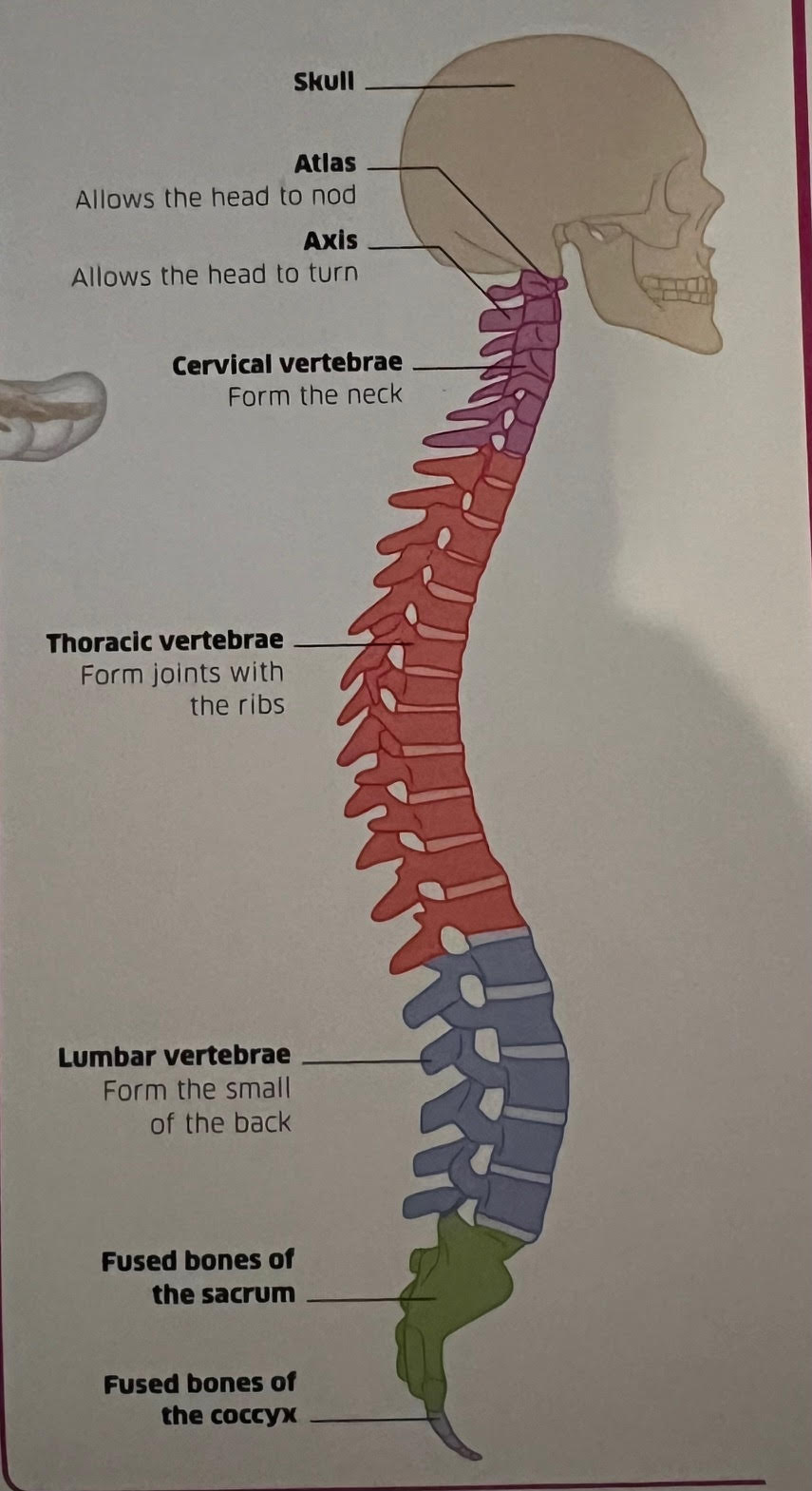
The chest and back area is home to some very important body functions. What would we do without a Spine? Also known as the Backbone, the Spine consists of 33 bones that allow us to twist, turn, and bend as needed. Its other massive responsibility is to protect our Spinal Cord, the thick bundle of nerves that serves as a “communications superhighway” and allows the Brain to send and receive messages throughout the body. The Spine is formed by small, pillar-shaped bones called Vertebrae that stack together to form a flexible S-shaped column. Sandwiched between each individual Vertebra are disks of cartilage that absorb shock by squishing as we move. They also prevent the bones from grinding together. Major, major back pain comes when any of these disks wear away or get out of position. Put it all together and the Spine acts as a secure tunnel that surrounds the Spinal Cord, which rests inside each Vertebra.
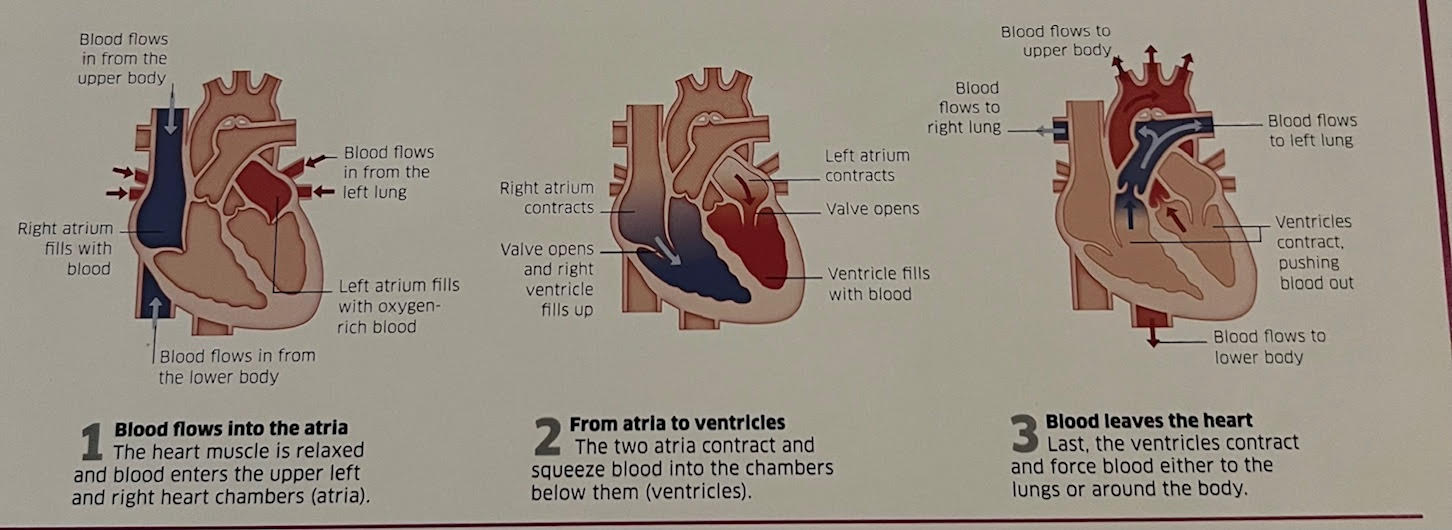
Maybe the hardest-working organ in our body is the Heart. It is a workhorse — over the course of an average lifetime, it will beat 2.5 billion times, pumping oxygen-rich blood to our cells, tissues, and organs. The Heart is a two-pump system strategically located in the chest between our right and left Lung. What does it mean to be a two-pump system? The right side of the Heart pumps blood to the Lungs to be oxygenated, while the left side receives blood back from the Lungs and sends it around the rest of the body. With every single heartbeat, three things are happening in rapid succession:
- Blood Flows In — De-oxygenated blood flows into the Right Atria from the upper and lower body. At the same time, blood that was just oxygenated by the Lungs flows into the Left Atria.
- Atria to the Ventricles — The Ventricles are little pockets located just below the right and left Atria. Blood then drops from each Atria into these Ventricle pockets. The Right Ventricle holds de-oxygenated blood, while the Left Ventricle holds oxygenated blood.
- Blood Leaves Heart — From here, blood is pumped out to either the Lungs or the body. Because the Right Ventricle holds de-oxygenated blood, it is sent to the Lungs via the Pulmonary Artery. Because the Left Ventricle holds blood that has already been oxygenated by the Lungs, it sends the blood out to the body via the Aorta, the body’s largest artery.
OK, so how does blood travel to and from the Heart? The answer is Blood Vessels. We have millions of Blood Vessels located throughout the body, and there are three main types: Arteries, Veins, and Capillaries. Arteries carry oxygen-rich blood from the Heart to the cells, tissues, and organs of the body. Think “Arteries take blood AWAY.” Veins carry oxygen-poor blood back to the Heart. Oxygen-poor blood is bluish in color, which is why our Veins are bluish. Arteries and Veins are connected by Capillaries, which are super tiny and thin Blood Vessels that allow our Red Blood Cells to deliver their goods. Capillaries are so thin that Red Blood Cells can deliver their oxygen to the cells that need it while also picking up the Carbon Dioxide that cells need to dump and send to the Lungs to exhale out of the body.
So, blood is pumped to the Lungs and around the body by the Heart using millions of Blood Vessels. But what does blood do exactly? Blood’s main role is to constantly move cells, oxygen, nutrients, proteins, and waste like Carbon Dioxide around the body. How else would these things travel around? Below is a breakdown of the different things blood carries around the body:
- Oxygen — Red Blood Cells pick up oxygen in the Lungs and deliver it to the cells of the body thanks to a pump by the Heart
- Hormones — Blood delivers chemical messengers (Hormones) to specific areas of the body
- Nutrients — After the Digestive System has processed your food and sucked out the useful nutrients, the blood helps deliver them around the body
- Body Defenses — White blood cells can use the blood for transportation. Platelets, which plug up a wound in the skin, are also found in blood.
- Waste Products — Waste from food and other things is delivered to the Liver for recycling or to the Kidneys to be made into urine
- Carbon Dioxide — Cells produce CO2 during energy production, particularly in the Mitochondria when breaking down glucose. This process is called Cellular Respiration. The CO2 needs to be taken out of the body, so blood delivers it to the Lungs to be exhaled. Red Blood Cells typically do this after they drop off their oxygen.
Red Blood Cells make up about 44% of blood, and they have one job: Deliver oxygen to the cells of the body. They do this by being a “container” for a protein called Hemoglobin. When de-oxygenated blood is sent from the Heart to the Lungs, it is Hemoglobin that oxygen binds to in order to oxygenate the blood. Hemoglobin is also what gives blood its red color, which is why blood turns from blue to red. In addition to Red Blood Cells, blood is made of:
- Plasma (Watery Substance) — 55%
- Red Blood Cells — 44%
- White Blood Cells — 0.5%
- Platelets — 0.5%
There are four main blood types: A, B, AB, and O. The type of blood you have depends on the Antigens that are on the surface of your blood cells. Antigens play a major role in the Immune System because your immune cells are able to read them and understand when something that isn’t YOU is in your system. When it comes to blood type, they are important because you cannot insert blood into somebody else’s body if the blood type of both individuals doesn’t match. If the blood types don’t match, your Immune System will mount an attack and reject the donated blood. This is why blood type is so important for blood transfusions. The types are:
- Type A — Can be donated to those with A or AB blood types
- Type B — Can be donated to those with B or AB blood types
- Type AB — Can only be donated to other people with the AB blood type. However, people can receive from any blood type. They are called “universal recipients.”
- Type O — These blood cells don’t have Antigens at all, meaning they can be donated to any blood type. These people are considered “universal donors.”
Finally, we have the Lungs, which take up the most space in your chest. The key function of the Lungs is to get Oxygen into the bloodstream while getting Carbon Dioxide out. The Lungs are packed with branching, air-filled tubes that get narrower and narrower before ending in tiny sacs called Alveoli that are covered in Capillaries. It is here where Oxygen and Carbon Dioxide are swapped out in a process called a Gas Exchange. When you breathe air in, the Oxygen molecules make their way down the Trachea (windpipe) and into the Lungs, where they navigate down the narrow tree-like branches until they reach the Alveoli. Here, Oxygen is loaded into de-oxygenated blood sent over by the Heart. At the same time, the de-oxygenated blood — which is carrying Carbon Dioxide waste expelled from cells around the body — trades its CO2 for the Oxygen. The Lungs then exhale the CO2 to get it out, and the newly oxygenated blood heads back to the Heart to be pumped around the body.
7️⃣ Abdomen and Pelvis
The abdomen and pelvic area is home to many crucial body operations, namely the Digestive, Urinary, and Reproductive Systems. You can’t be claustrophobic to live in this region — the area is absolutely jam-packed with organs that are extremely versatile and carry out so many important functions.
Let’s start with the Stomach. After food is grounded up in the mouth, it is carried down to your Stomach via a long tunnel called the Esophagus. There, two things happen. One, the food is bathed in Gastric Juice (basically, acid), which kills most harmful bacteria that may have been on it. Second, the muscles of the Stomach literally crush and churn the food and acid into a creamy liquid called Chyme.
Next, the food, now in Chyme form, is passed on to the Small Intestine. This is where most of the digestive process takes place, but it’s a team effort because the Small Intestine is assisted by two helpful neighbors: the Pancreas and Gall Bladder. Both of these parts release different substances into the Small Intestine to break the Chyme down even further. The Pancreas releases Pancreatic Juice that is full of chemical-enzymes, while the Gall Bladder releases Bile, which helps us digest fat. Bile is actually produced by the Liver and sent over to the Gall Bladder for storing and processing. It then releases it during digestion.
The Pancreas is a really important organ. In addition to aiding the Small Intestine in the digestive process, it produces the hormone Insulin and releases it into the blood to lower blood sugar (i.e. blood glucose) levels. Insulin basically removes glucose (i.e. carbs and sugar) from the bloodstream by packing it into our cells so it can be used for energy. If the Pancreas can’t produce enough Insulin, or our cells are resistant to this packing process, it results in Type 2 Diabetes. This condition used to be a death sentence before synthetic Insulin was discovered. Type 1 Diabetes is more of an autoimmune disease where our immune cells attack our Pancreas cells and render it ineffective.
Back to the Small Intestine. Again, this is where most of the digestive process happens. With the help of the Pancreas and Gall Bladder, the Chyme from the Stomach is broken down even further until it’s a pool of simple nutrients. These nutrients are then passed through the walls of the Small Intestine and into the bloodstream, where the Liver enters the conversation.
Dr. Peter Attia has called the Liver arguably the most impressive organ in the body. That’s because it literally carries out hundreds of essential tasks in the body. The Liver is our largest internal organ, and all of our blood flows through it for processing and purification during the digestive process. Although it carries out so many different tasks, one of its most important is to control the chemical makeup of the blood to keep our body stable. Think of it as the body’s built-in detox center — it filters the blood coming from the Small Intestine and removes harmful substances like drugs, alcohol, and waste products. This ability to remove chemicals from your blood is why alcoholics die when they abuse and damage the Liver. Without the Liver firing on all cylinders, the blood becomes deadly toxic. Other important functions of the Liver include:
- Produces Bile — As already mentioned, the Liver makes Bile to help digest fat. It is stored in the Gallbladder.
- Stores and Releases Energy — After you eat, the Liver stores extra glucose (sugar) as glycogen, and later turns it back into glucose when your body needs an energy boost
- Blood Storage — About 15% of the body’s blood is stored inside the Liver at any time
Any nutrients that are not passed into the bloodstream by the Small Intestine are largely considered waste and are sent to the Large Intestine to deal with. The Large Intestine is the final stage of the digestive process. It is home to trillions of mostly friendly bacteria that help break down the remaining Chyme into nutrients that can be spared. Any Chyme that cannot be digested with the help of these bacteria works its way through the Large Intestine, dries up during its journey, and is eventually pooped out.
We can’t talk about poop without mentioning pee. Additional key members of the abdomen area are the Kidneys, which, similar to the Liver, filter and clean the blood by removing waste. While the Liver primarily removes toxic chemicals like drugs, medication, and alcohol, the Kidneys focus on removing water-soluble waste expelled by cells and extra fluid roaming around in the body. These would poison you if they weren’t removed. The Kidneys filter the blood and turn the waste and extra fluid into Urine, which is eventually peed out. Like the Heart, the Kidneys are at work 24/7 — it takes only an hour for them to clean all the blood in your body! This is four times faster than a dialysis machine, which is often used by patients who have a missing or damaged Kidney and need help filtering their blood.
In addition to filtering blood, the Kidneys also help keep the body’s water content balanced. They release more Urine if you have too much fluid in your body, and they retain more if you are dehydrated. The Hypothalamus in the Brain controls this by monitoring water levels and telling the Pituitary Gland to release hormones that tell the Kidneys what to do. Overall, the Kidneys are one of the hardest-working organs in the body — don’t let anyone tell you that they’d “give a Kidney” to do something!
Finally, it’s worth highlighting the parts of the Female Reproductive System in the pelvic area. Baby girls are born with all 1,000,000+ of their eggs already present in their Ovaries. The Ovaries are located on both sides of the Uterus and are connected to it by the Fallopian Tubes. When sperm fertilizes one of the eggs in the Fallopian Tube, it begins to develop in the Uterus, first as an Embryo for the first eight weeks, then a Fetus, then a baby that is ready to be born. It takes about 40 weeks for a Fetus to reach its full size. During that time, it is supported by the Placenta, which is attached to the inner lining of the Uterus and supplies the baby with oxygen and nutrients. An Umbilical Cord also connects the baby to the Placenta and provides oxygen while removing waste.
The Menstrual Cycle (period) is something that girls have to deal with from ages 12-50. It happens once every single month and is designed to prepare a woman for pregnancy. The cycle happens in four main stages over the course of about 28 days:
- Egg Ripens — Hormones are released that prompt an immature egg to start growing in the Ovaries
- Egg Is Released — The ripened egg is released from the Ovaries into the Fallopian Tube, where it begins heading toward the Uterus. Meanwhile, the inner lining of the Uterus literally thickens to prepare to receive the egg, in hopes that it will be fertilized.
- Egg Close to Uterus — The egg is now very close to reaching the Uterus. If it is fertilized by sperm, it will begin to grow here in the Uterus.
- Menstruation (Period) — If the egg is not fertilized, both the egg and the thickened Uterus lining fall apart and leave the body, usually as blood. The breakdown of the thickened Uterus lining is what causes the blood. This is called Menstruation, or having a period.
When they first enter a woman’s body, there are about 250 million sperm cells. The further they swim, the more of them get picked off by various factors. Only about 100,000 of them reach the Uterus, and just 50,000 or so make it to the Fallopian Tubes. If everything goes well, fewer than 50 will reach the egg in the Fallopian Tube, and only one buries through its outer layer to fertilize it. That one is you. Talk about long odds.
8️⃣ Legs and Feet
What are we without a firm base? Our legs and feet allow us to walk, run, jump, and move our body in a way that isn’t possible for most animals that use all four limbs to get around. Below are some interesting features of the lower body:
- Sciatic Nerve – This is the longest and thickest nerve in the human body. It runs from the lower back down to the feet. When it gets compressed or irritated, it can cause intense pain, numbness, or weakness down the leg . . . this condition is known as Sciatica.
- Achilles Heel – The strongest tendon in the body, the Achilles connects your calf muscles to your heel bone. It’s what allows you to stand on your toes, walk, and run. Despite its strength, it’s also vulnerable to tears or ruptures, especially during sudden movements — hence the phrase “Achilles heel” to describe a single point of weakness. It’s called “Achilles” Heel after the Greek warrior Achilles, who was killed by an arrow to the heel.
- Femur – The thigh bone, or femur, is the longest and strongest bone in the human body. It supports much of your body’s weight during standing, walking, or running.
- Tibia and Fibula — These are the two bones in the lower leg. The Tibia, also called the shinbone, is the larger, weight-bearing bone that supports most of your body’s weight, while the Fibula is the thinner bone that runs alongside it and helps stabilize the ankle and support muscles of the lower leg.
9️⃣ Wires All Over Us
Whether it’s nerves, blood vessels, or lymph vessels, our bodies are full of networks. In fact, it can be helpful to imagine the body as being covered in “wires” that connect everything and keep us running.
Our Nervous System is one of the most important networks. It uses nerves to carry messages between the Brain and the rest of the body. These messages control everything from movement to reflexes. The Brain Stem and Spinal Cord act like major highways in this system.
Our Circulatory System is another vital network. Blood Vessels carry oxygen and nutrients to every cell in the body. Arteries take blood away from the Heart, and Veins return it once the oxygen has been used.
The Lymphatic System is a lesser-known network, but it plays a key role in keeping us healthy. It moves a fluid called Lymph through channels and nodes, helping the body fight off infection as part of the Immune System.
In short, our bodies are wired, literally, with systems that connect, protect, and power us every day.