
Undaunted Courage
Stephen Ambrose
 GENRE: History
 PAGES: 485
 COMPLETED: February 2, 2026
 RATING:
Short Summary
Lewis and Clark’s expedition to the Pacific Ocean is widely considered a crowning achievement in American history. In Undaunted Courage, Stephen Ambrose traces every leg of the journey, showing how the expedition’s discoveries and maps laid the groundwork for America’s later westward expansion.
My Takeaways
1️⃣ The Louisiana Purchase Paved the Way For The Expedition
The Lewis and Clark Expedition from Missouri to the Pacific Ocean and back is universally included in the pantheon of great American achievements. Led by captains Meriwether Lewis and William Clark, the expedition sought to discover what was to the west of the early United States, and it helped set the table for the country to become the global leader that it is today. But how did the expedition come to be? Why did we send these two men and their crew on such a mission?
The expedition (1804-1806) was authorized by Thomas Jefferson, just the third President in the nation’s history and a man who was fixated on helping the U.S. expand westward after it won independence from British rule in 1776. More than almost any American at the time, Jefferson — who became President in 1801 — believed that the U.S. could one day become a coast-to-coast power. And it was that vision that inspired him to pull the trigger on the Louisiana Purchase in 1803 — a strategic move that instantly doubled the size of the U.S. Jefferson bought the land from Napoleon of France for $15 million, about four cents per acre. At that price, it’s widely considered one of the best land deals of all time.
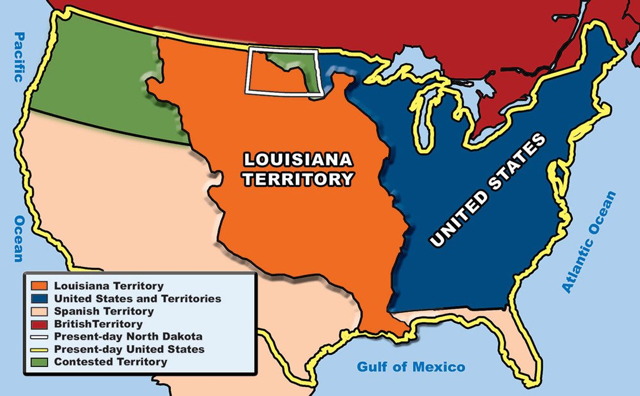
Although preparation for the Lewis and Clark Expedition was already underway at the time of the Louisiana Purchase, the acquisition significantly increased the mission’s odds of success. Prior to the purchase, the western two-thirds of the continent was controlled by European powers and inhabited by numerous Native American tribes, with France, Britain, Spain, Russia, and the U.S. all competing for influence. As a result, had Lewis and Clark set out before the Louisiana Purchase, they would have been exploring hostile territory. This is one of the reasons several previous American plans to explore the West in the decade after winning independence had not been very successful. But the Louisiana Purchase changed everything. Now, Lewis and Clark were primarily exploring American territory, which made their mission a little less risky as they departed from St. Louis in May 1804.
As one might imagine, Jefferson was eager to learn what he had just bought. He wanted detailed information on the animals, plants, mountains, climate, and Indian tribes that lay to the west of the 13 original colonies. He wanted to know if a fur-trade empire could be established in the West. Most importantly, he wanted somebody to chart and map the path to the Pacific Ocean. After serving in the army, Lewis had been Jefferson’s trusty secretary for several years, and both men were slave owners in Virginia. The trust and familiarity between the two inspired Jefferson to assign the mission to Lewis. Wanting a partner and friend to lead with, Lewis chose Clark — who he had met during his time in the military. Together, the two captains selected a crew to join them. Jefferson gave the group three main objectives:
- Exploration — Find and map an all-water route to the Pacific Ocean. This was Jefferson’s top priority. During their expedition, Lewis and Clark discovered that there isn’t an all-water route to the Pacific Ocean. This was a disappointment, but the maps they developed dramatically improved American geographic knowledge of the West.
- Commerce and Trade — Study the trade operations of the British, who routinely moved down from Canada to do business with some of the Native American tribes on the Missouri River, and recommend ways for the U.S. to overtake those operations. Jefferson believed the U.S. could one day become a fur-trade empire along the Missouri, but the Americans first had to drive the British away.
- Scientific Discovery — Describe the flora, fauna, rivers, mountains, soil, birds, animals, plants, weather, rocks, and people of the West. Collect unknown seeds, plants, minerals, artifacts, botanical specimens, and animals for further scientific study. Record celestial observations and any other pertinent data.
Overall, Jefferson’s purchase of Louisiana was instrumental in the success of the Lewis and Clark Expedition and a big reason America is the coast-to-coast power that it is today. Prior to the Louisiana Purchase, the U.S. consisted of the original 13 east-coast colonies — the acquisition doubled the country’s size overnight. By buying Louisiana from France and sponsoring the Lewis and Clark Expedition, Jefferson opened the gates to what we call America today, especially after the steamboat and railroad system were invented. We went on to secure the rest of the continent through war and other purchases, but everything we have today west of the Mississippi River is largely thanks to these two initiatives. They were two of the best things Jefferson achieved as President. As the author writes: “Every American everywhere has benefited from Jefferson‘s purchase of Louisiana and his setting in motion the Lewis and Clark expedition.”
2️⃣ The Journey West: Stages of the Expedition
The Lewis and Clark Expedition traveled up the Missouri River, crossed the Great Plains through present-day North Dakota, South Dakota, Montana, and Idaho, went up and over the Bitterroot Mountains of the Rockies, and ended with a sprint down the Columbia River to the Pacific Ocean.
It was a daunting mission that required extensive preparation. Lewis was responsible for deciding which supplies — and how many of each — would best sustain the expedition while keeping the overall load manageable. He prepared the expedition’s keelboat in Harper’s Ferry (now West Virginia) and purchased a huge list of items, including fishing tackle, lead canisters, medicines, dry goods, ink, tomahawks, tobacco, clothing, rifles, gun powder, lead, beads, salt, scientific instruments, soup, and a litany of gifts to trade with the Indians when needed.
Selecting the right crew was also critical. Lewis and Clark ultimately selected 30-40 members, most of whom were soldiers. They called their crew the Corps of Discovery. Among those who accompanied the expedition was Sacagawea, a Shoshone woman whose geographic knowledge, diplomatic presence, and connections to western Indian tribes were absolutely critical. Sacagawea’s presence with the group signaled peaceful intentions to Indian tribes, and she helped facilitate interactions, especially with the Shoshone tribe. Below is a high-level overview of the expedition’s various phases after departing St. Louis in May 1804:
- Up the Missouri to Winter Camp (May 1804-March 1805) — The expedition tracked up the Missouri River to its first winter camp destination at Fort Mandan in North Dakota. Here, they spent the winter months with the Mandan and Hidatsa Native American tribes. The food, primarily corn, that the Mandans provided was critical to the expedition surviving its first winter.
- Fort Mandan to Marias River (April-June 1805) — The next push put Lewis and Clark in the history books. No American had ever ventured west of Fort Mandan. Every step from there on out, about half the continent, was unknown to the civilized world. The expedition took off from Fort Mandan in April 1805 and made its way to a fork in the Missouri River in present-day Montana. Here, Lewis and Clark had to make a critical decision. Which fork should they follow? After much deliberation, they decided that the south fork was the true Missouri River. They chose it and pressed forward, despite most of the crew thinking (incorrectly) that the north fork was the correct path. Lewis named the north fork Marias River. On their way to this split in the Missouri River, Lewis and Clark became the first two Americans to see the Rocky Mountains.
- The Great Falls Hike (June-July 1805) — After correctly choosing the south fork (the true Missouri River), the expedition eventually arrived at the Great Falls of the Missouri. From there, the group had to carry their boats and belongings 16 miles over land to resume their progress on the Missouri River. This was one of the most physically punishing segments of the journey. It took the group a month to do it.
- The Three Forks — Back on the Missouri River, the expedition eventually came to the Three Forks in present-day Montana, where a trio of rivers come together. Lewis named the forks Madison River, Gallatin River, and Jefferson River (for Thomas Jefferson). They followed the Jefferson River and eventually arrived near the base of the Bitterroot Mountains in the Rockies. Here, they desperately required support from the Shoshone Indians. They needed horses and a guide to take them over the mountains to the Columbia River.
- Up and Over the Bitterroot Mountains (September-October 1805) — The Nez Perce Indians helped Lewis, Clark, and the rest of the expedition carry their baggage from the base of the Jefferson River up and over the Bitterroot Mountains (i.e. the Rocky Mountains) via the Lolo Trail. This was a 160-mile hike, by far the most challenging part of their entire trip. It was freezing cold and they became so starved that they had no choice but to eat a few of their horses. A Nez Perce Indian named Twisted Hair guided them; without his help, they would have died.
- Down the Columbia to the Pacific Ocean — With the Rocky Mountains conquered, the expedition built canoes, loaded their baggage, and set off down the fast-moving Columbia River. Ahead lay the Pacific Ocean. They arrived in November 1805.
- Winter at Fort Clatsop (December 1805-March 1806) — Having arrived at the Pacific, the expedition built and camped at Fort Clatsop for the winter. Here, Clark finished his map of the West — a major contribution to the country.
- Heading Home — The journey back to St. Louis was tough. The expedition was very low on supplies and it had to conquer the Bitterroot Mountains again. After the Nez Perce Indians again expertly guided the group over the Rockies, Lewis made the mistake of dividing the expedition into three groups to explore alternative routes. His band ran into the dangerous Blackfeet Indians. A skirmish ensued, causing a few Native American deaths — the only violent deaths on the trip. Eventually the groups reunited and made it safely back home to St. Louis in September 1806.
All in all, getting to the Pacific Ocean and back took about two years, but it was worth the effort. The treasure chest of journal entries, data and observations, and specimens they collected gave the United States a great understanding of the West and laid the groundwork for future exploration and expansion.
3️⃣ The Indians Were Critical to the Expedition’s Success
The Lewis and Clark Expedition encountered more than 50 Native American tribes along its journey, including the Sioux, the Mandans, Shoshones, Chinooks, Hidatsas, Nez Perce, and the mighty Blackfeet.
These Indian tribes had been settled in the territories Lewis and Clark were exploring for centuries. They felt the land was theirs. It was their home. Understandably, they were highly suspicious of the expedition members. And, just as understandably, Lewis and Clark were worried about how they would be received by the Indian tribes. Given the uncertainty on both sides, it’s fairly surprising that, outside of a few rough encounters with the Sioux and Blackfeet, there wasn’t a lot of violence on the expedition.
In fact, other than stealing a few items and horses, the Indians were extremely helpful and were a major reason the expedition succeeded. They provided critical winter shelter and food, traded horses when the expedition needed it most, helped build canoes, served as guides when crossing the Bitterroot Mountains, and much more. It’s not a stretch to say that Lewis, Clark, and the expedition members likely would have died without their help along the way.
For example, the expedition spent two winters in or near Indian communities. Their first winter away from home was spent at Fort Mandan, where the Mandan Indians gave the group shelter, kept them warm, assisted with hunting, and provided food. The following winter was spent at Fort Clatsop, a structure built by the expedition, where the nearby Clatsop and Chinook Indians provided priceless information that helped Lewis and Clark hunt for food and survive the rainy winter on the Pacific Ocean. Their skills as fishermen and root collectors were critical.
Another example: the Shoshone and Nez Perce Indians. These tribes were extremely helpful when the expedition arrived at the Bitterroot Mountains. The Shoshones supplied Lewis and Clark with much-needed horses to carry their belongings over the mountains, and members of the Nez Perce tribe served as guides. The expedition likely would have lost its way and starved to death on the Rockies without the astute sense of distance and direction these guides provided. Their assistance helped Lewis and Clark tackle the biggest obstacle (literally) on their path to the Pacific Ocean.
This begs the question: why were the Indians so cooperative? They could have ambushed the group at any time and taken all of their supplies. One of the expedition’s goals, as outlined by Thomas Jefferson, was to look for opportunities to bring the Indians into potential future American trade operations in the West. Throughout the trip, Lewis explained to the Indians that the United States now owned the land thanks to the Louisiana Purchase and promised that support from the Americans would come their way if they helped the expedition. Many of these tribes felt they were at the mercy of the Sioux and Blackfeet Indians — two bullies of the Plains that seemed to have an endless supply of weapons and gun powder. The British, coming down from Canada, were the suppliers of those weapons. Lewis’s pitch: help us, and the U.S. will help you. Sacagawea’s presence also helped communicate peaceful intentions and reduce suspicion.
The only major issues Lewis and Clark encountered were with the Sioux and Blackfeet. The Sioux tried blocking the group’s path along the Missouri River, and a violent encounter with the Blackfeet led to a few Native American deaths. Because of their relations with the British, both tribes were considered enemies of the U.S. Otherwise, the Indians Lewis and Clark came across during their mission were very helpful.
4️⃣ The Expedition Was Dangerous
Although the Louisiana Purchase meant they were exploring American territory (vs. hostile or contested territory), the Lewis and Clark Expedition was still highly dangerous. West of Fort Mandan, the group was exploring territory that no American had ever been to before — land that the Indians felt was theirs. They battled disease and illness, horrific weather conditions, and so many other significant threats. It’s fairly surprising that only one of the crew members died on the expedition.
The journey was lined with danger. Maybe the greatest threat the group faced was the possibility of an Indian tribe killing them to take their stuff. The expedition was carrying tons of valuable items, from weapons, beads, tobacco, and much more. The major tribes along the path to the Pacific Ocean significantly outnumbered the expedition. It wouldn’t have taken much for one of these tribes to rally together and take them out. But, aside from theft, most of the Indians were extremely helpful (see previous takeaway).
Disease was another major threat. Living conditions were poor throughout the journey, and several members of the group contracted diseases like dysentery and malaria along the way. Lewis purchased some pills and general natural remedies before the trip, but medicine at the time wasn’t anywhere near what it is today. Making matters worse, malaria-carrying mosquitoes were constantly biting the group throughout the expedition, particularly as they traveled along the Missouri River. When illness struck, Lewis and Clark often acted as physicians, nursing their men through prolonged bouts of sickness.
The potential of getting lost was yet another significant danger. The group was in completely uncharted territory for Americans. At one point in present-day Montana, Lewis and Clark came across a fork in the Missouri River and had to choose which route to take. It took them days to decide, and the fork they chose went against the one the crew believed was correct. Later on in the Rocky Mountains, Lewis and Clark almost certainly would have become lost or starved to death without the guidance of the Nez Perce Indians. One wrong turn at any point along their journey could have spelled disaster.
Weather was also a challenge. The group faced bitter cold winters, severe winds, hailstorms, and torrential downpours as they moved deeper into the Pacific Northwest. It was nearly impossible to sleep through some of these conditions, which only exasperated the issue of disease and illness. Other threats the group faced included:
- Encounters with grizzly bears and other wildlife
- Food shortages, especially during the crossing of the Bitterroot Mountains, where game was scarce and starvation became a real possibility
- Injuries from rough terrain and prickly pear cactus
- The risk of losing horses or supplies
- The constant threat of damage or loss to journals and scientific collections . . . this was the very purpose of their mission!
Put it all together, the Lewis and Clark Expedition was an extraordinarily dangerous undertaking. The fact that all but one man — Sgt. Charles Floyd, who died of illness early in the journey — completed the round trip to the Pacific and back stands as one of the most remarkable achievements in early American exploration.
5️⃣ Aftermath of the Expedition and Meriwether Lewis’s Demise
When they finally arrived home in St. Louis in 1806, Lewis, Clark, and the other members of the expedition were hailed as heroes. The mission had been a huge success. The crew returned with a trove of journal entries, maps, and scientific collections. These materials would later play a significant role in America’s expansion West, particularly as steamboats and railroads made large-scale expansion possible.
Lewis did, unfortunately, have to inform President Thomas Jefferson that an all-water route to the Pacific Ocean did not exist. This was Jefferson’s No. 1 wish for the expedition, but there is nothing that could be done about it — reaching the Pacific required a 160-mile hike over the snowy Bitterroot Mountains in the Rockies.
One of the other major objectives Lewis and Clark were tasked with involved recommending ways to drive British traders and their North West Company off the Missouri River so the U.S. could create a fur-trade empire in the West. Lewis — who had been appointed governor of the Territory of Louisiana by Jefferson — spent an entire year building a plan, and he envisioned himself as part of the vast American empire. His plan centered around two main ideas:
- Establish Fair Trade Along the Missouri River — Lewis proposed building trade posts along the Missouri River that would be guarded by U.S. Army soldiers. This would help drive the British, who had a near-monopoly on trading activity with the Indians along the Missouri via their North West Company, out of the area. With the British out of the way, American merchants would set up at the military-protected trading posts and do business with Indians in a fair market.
- Establish a Government-Led Trade System Further West — As for the territory west of the Mandans, Lewis, in alignment with Jefferson’s Indian Policy, proposed having the U.S. government set up federally-run trading posts to do business with the Indians. Until more Americans moved West and established private businesses of their own, it would temporarily resemble the dominant trade practices the British were deploying with their North West Company. Lewis argued that if the U.S. didn’t do this, the British would just keep dominating the fur-trade business on American soil.
One factor that made establishing a plan like this difficult was that the Louisiana Purchase, and the expedition itself, caused a lot of Americans to want to move west immediately. Jefferson worried that if this wasn’t done in an orderly and controlled fashion, American settlers would aggressively move into Indian land and cause a bunch of wars to break out. Lewis and the U.S. government wanted the Indians to maintain their land as they slowly built their trade empire. As history went on to show, that did not happen; there were many bloody battles over land between the Americans and Indians. In the end, Jefferson’s Indian Policy and Lewis’s plan weren’t very successful.
A puzzling development that occurred after the expedition was Lewis’s failure to publish a book. Several other members of the expedition published memoirs about the experience, and it drove Lewis crazy because he felt it would cut into his profit. He wanted to be the first to write about the expedition, and Jefferson repeatedly pushed him to get it done. But, inexplicably, he never completed his work. It wasn’t until a collection of scholars came along years and decades later that comprehensive accounts of the expedition based on Lewis’s journals and reports were published.
Lewis’s failure to produce and publish a book about the expedition was part of a long line of troublesome warning signs. He had a very hard time adjusting to his new home life. At 33-years-old, he was a national celebrity and the newly appointed governor of the largest territory in the U.S. His newfound fame, and the pressures that came with his life after the expedition, caused him to spiral out of control. He was drinking heavily, staying out late with friends, and regularly using morphine to combat various ailments. He was sad and depressed that he couldn’t find a wife, despite several attempts at courtship. All of these issues were compounded by the fact that he made some bad business decisions that put him into serious debt.
The pressure eventually caused him to lose his mind. He became delirious and erratic. And on October 11, 1809, Lewis took his life while staying at Grinder’s Stand, an inn on the Natchez Trace in Tennessee. He died of self-inflicted gunshot wounds to the head and abdomen and is buried at Grinder’s Stand today. He was just 35 years old. As for Clark, Jefferson appointed him the principal Indian agent to the Louisiana Territory after the expedition, and in 1813 he became Governor of the Missouri Territory. He later served as Superintendent of Indian Affairs in St. Louis until his death in 1838.